
Finding Redmond Residents Through Records
No single official roll lists every person living in Redmond. Deschutes County holds the systems that matter most. Parcels, recordings, elections, and trial courts each answer a different slice. Most run from Bend. City Hall keeps the municipal side, such as planning and permit context. For an earlier household, a library or archive may beat any government desk. Labels differ across these systems. A result might be a parcel, a recorded instrument, a voter-data product, or a court event. It might also be a printed directory entry. Knowing which one you hold keeps the lookup honest.
Lead with an address whenever you can. It gives the county property system, DIAL, a stable starting point. It also lets you compare the displayed situs against the map/tax-lot. A bare name can surface in unrelated parcels, court matters, historic volumes, or entity records. Write the source date beside each result. A match earns trust when two independent sources agree on a name and a place. The sources must also agree on a time window.
- Validate the mailing address, then check its City and County context.
- Search DIAL by Property Address (Situs) and save the account and map/tax-lot.
- Use the Recorder when a sale or instrument needs a title-record check.
- Use a dated directory, census, or archive source for an earlier address association.
- Send a narrow request to the correct custodian when no online record is published.
Redmond Residents Records Offices
Each custodian answers a different question. The records differ as well. The Assessor points researchers to parcel, tax, valuation, sales, and map information in DIAL. The Clerk’s Recording office preserves title instruments and historical indexes, while Elections staff administer registration and data requests, with Oregon My Vote limited to a voter’s own record. The Redmond street directory covers the street-by-street process.
Deschutes County Clerk, Recording
Deschutes Services Building
1300 NW Wall St., Bend, OR
Business-day counter hours: 8 a.m. to 4 p.m.
Deschutes County Assessor
Deschutes Services Building, second floor
1300 NW Wall St., Bend, OR
Assessment questions route through the Assessor
Deschutes County Elections
1300 NW Wall St., Suite 202
Bend, OR
County voter-information request route
DIAL and the Redmond Parcel Record
Deschutes County Property Information, known as DIAL is where parcel research for a Redmond address usually begins. Access is free. No account is needed. Search modes include owner name, account number, map/tax-lot, situs, subdivision, mobile-home-park, and an interactive map. Confirm the situs and map/tax-lot first. An owner-name result means little before that check.
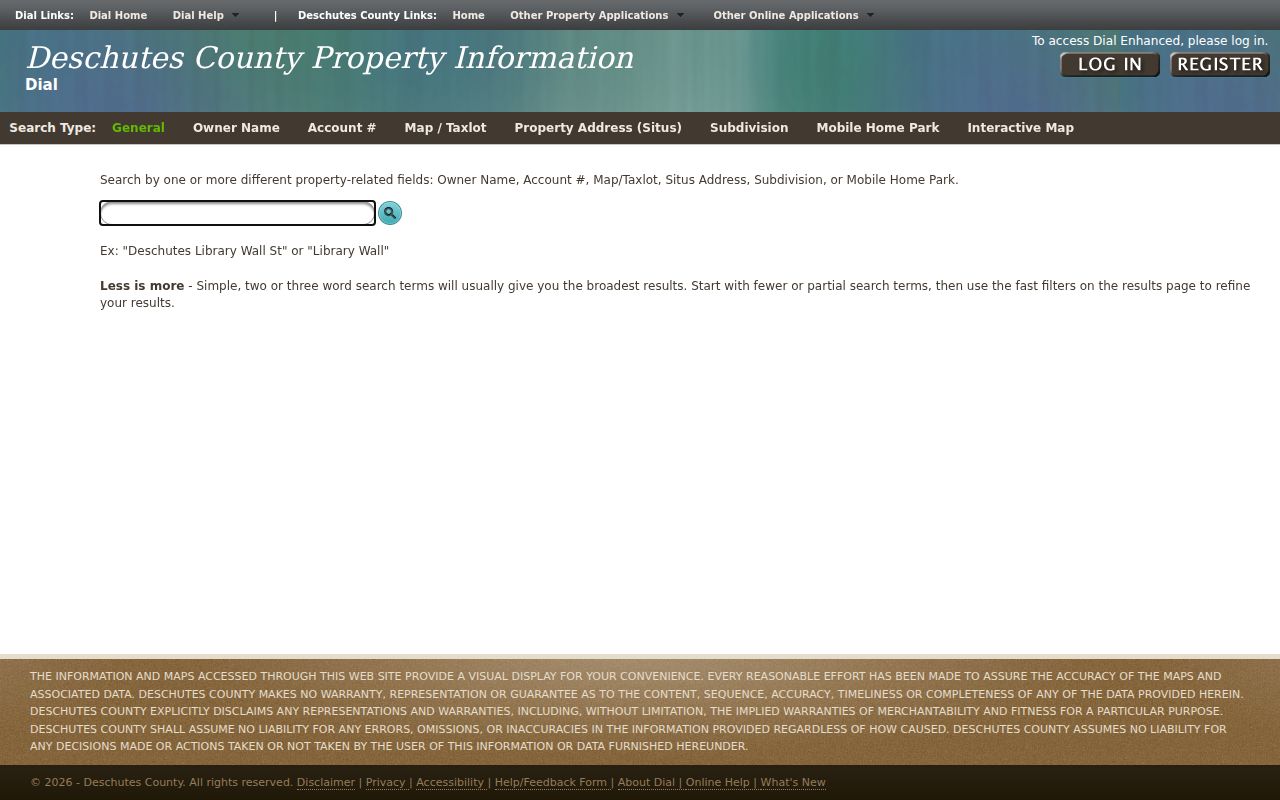
The DIAL landing page shows why the starting field should match the question. A public account can display tax status, values, sales, structures, permit and document links, and mapping routes. Remember what the ownership panel is. It is a tax-record label. It does not prove the named addressee occupies the situs today.
| DIAL control | Use for Redmond research | What to save |
|---|---|---|
| Property Address (Situs) | Find a candidate parcel from a full or partial address. | Search wording and displayed situs. |
| Fast Filters | Narrow a broad result set when a City filter appears. | Applied filter and access date. |
| Account number | Return to the same assessment record. | Account identifier. |
| Map/Tax Lot | Connect the parcel to mapping and Recorder research. | Map/tax-lot identifier. |
| Reports | Document the public view as Basic, Full, or Custom. | Report type and date. |
Redmond Address Checks Before a Lookup
A postal city, a parcel, and City jurisdiction are three different things. USPS tells you how mail is addressed. The City of Redmond map adds planning and infrastructure context for property inside the City limits. County DIAL covers Deschutes County parcels. Near the urban edge, a Redmond mailing address can sit on an unincorporated parcel. Check the City map beside the County record before assuming a City permit or request applies.
The same care protects older searches from false matches. Redmond’s grid uses NE, NW, SE, and SW. Drop a direction and you land on another street. Preserve the form shown by the official parcel record or postal validation. A map helps with context. It is not a survey, though, and it never replaces the legal description or the County’s map/tax-lot identifier.
Record term. A situs is the physical property address shown in an assessment record. A parcel is the taxable land unit identified by an account and map/tax-lot, not a roster of the people at that address.
Redmond Deed Research Across Two Eras
The Recorder holds authority over recorded title instruments. County guidance points to online Official Records from 1983 forward. Historic deed indexes reach from 1871 through 1984. That overlap means a boundary-year search may need both paths. A current account’s sales tab is only a lead. Follow it to the Recorder. Capture the recording number, document type, recording date, direct or indirect party role, and legal description. Then check whether the legal description continues into the next instrument.
This compares record systems, not people. A deed names parties to one land transaction. An archival tax roll ties a name to a taxable parcel in a given year, while a dated directory or census can independently place that printed name at an address. Keeping those labels apart builds an honest historical-address trail for family history or estate research.
Current Redmond Residents Source List
Directory-style records in Redmond are purpose-built, not a master list. DIAL describes a parcel and its assessment context. The Recorder indexes parties. My Vote serves only a voter’s own registration. County or state voter-data products follow a signed request path with statutory limits. Court and business systems answer still narrower questions. Use the source that owns the fact being checked.
| Record source | Public label | Custodian | Access route |
|---|---|---|---|
| DIAL parcel account | Situs, tax and ownership/mailing fields | County Assessor | Free Standard portal |
| Recorder index | Direct/indirect instrument parties | County Clerk | Online current search and historic index research |
| Voter data product | Statutorily public voter fields | County or State elections office | Signed request with product and geography |
| Court access | Basic case information or docket events | Oregon Judicial Department | Free search, OJCIN, terminal, or file request |
| Historic collections | Printed name and address association | Library, museum, archives | Collection-specific access |
Two people can share one name. The Redmond resident lookup route handles this with two independent, time-bounded anchors. That method is safer than pairing a name-only result with an address or identifier that belongs to someone else entirely. Independent agreement is what makes the identification stick.
Redmond Voter Records Have a Controlled Route
Oregon My Vote lets a registered voter manage one registration only. You can update your own details. You can track a ballot. You can also reach the county elections office through it. What it does not do is open a name-and-address roster for browsing. A public voter-data request travels a different route. It runs through the Oregon Secretary of State or the Deschutes County Voter Information Request Form. The county form wants specifics. Applicants state a product, geography, and precinct choices where relevant. They add party setting, election range, output format, contact details, signature, and date.
Pick the narrowest product and scope that answers a lawful civic or historical question. Options described on the form include registered-voter data, voting-history material, and election activity. Profiles, walking lists, and printed maps round out the list. Use conditions come attached. Protected addresses, signatures, full birth dates, driver-license data, and Social Security numbers stay out of public files. They never become a public file to rebuild or pass along.
Redmond Court and Vital Record Limits
Historic research and restricted certificate orders follow separate tracks. Both routes run through the Oregon Health Authority Vital Records page. Oregon seals birth records for 100 years. Death, fetal-death, marriage, domestic-partnership, and dissolution records stay restricted for 50. Curiosity about a name or address grants no access to a sealed certificate. Eligibility category, relationship, identity proof, and the correct form govern every order.
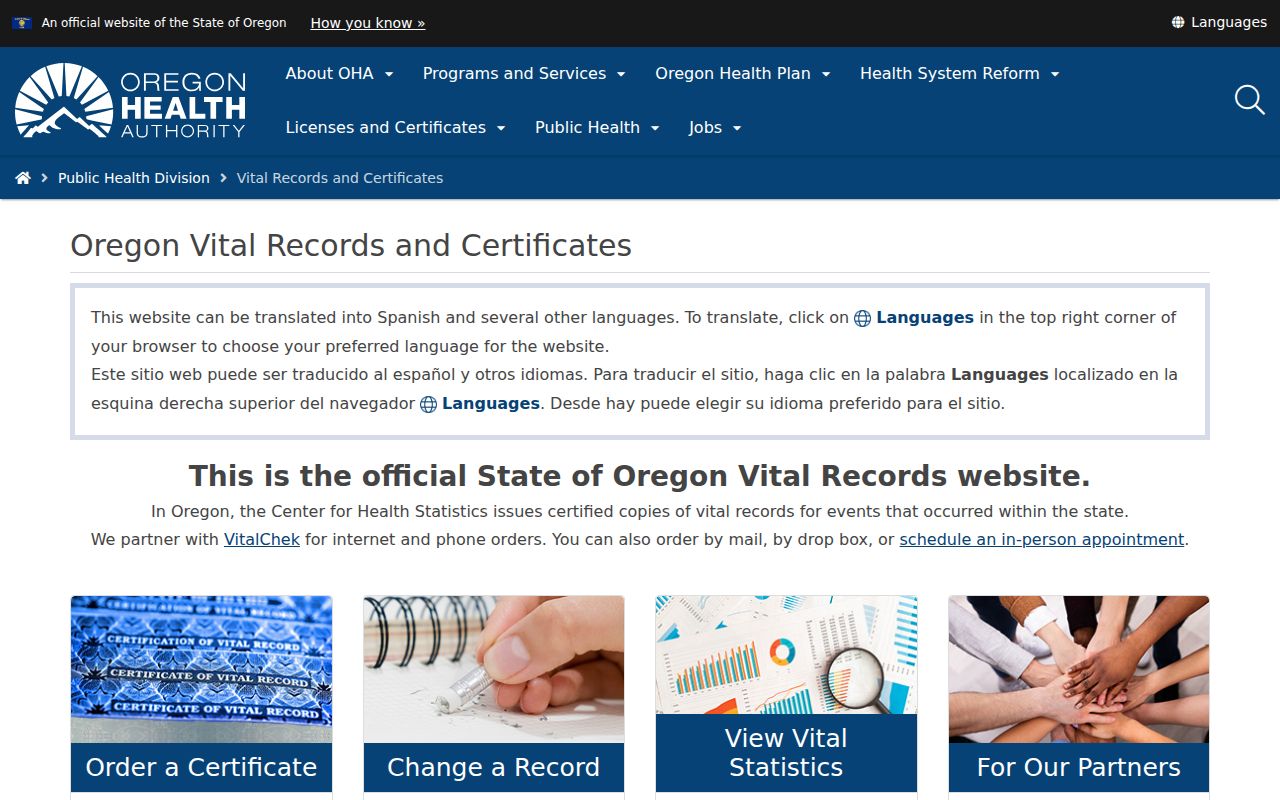
Treat the state office page as a rulebook, not a people-search result. Court records demand equal care. Free OJD access covers basic records and calendars. OJCIN offers a broader paid route. Deschutes Circuit Court supplies copies through its stated in-person, online, or mail process. Protected case categories and redacted details stay outside public web reach.
Redmond Records Requests Under Oregon Law
A focused request works better than a broad name search. This applies when a City or County record sits unpublished. The county's public-records request procedure routes each request to the responsible department. It also explains cost estimates plus a five-business-day acknowledgement. Oregon Public Records Law, ORS 192.311-192.478, frames the process. Response steps are set out in ORS 192.324. A public body may charge actual costs and demand payment of an estimate. It may also withhold exempt material or hand over a redacted version.
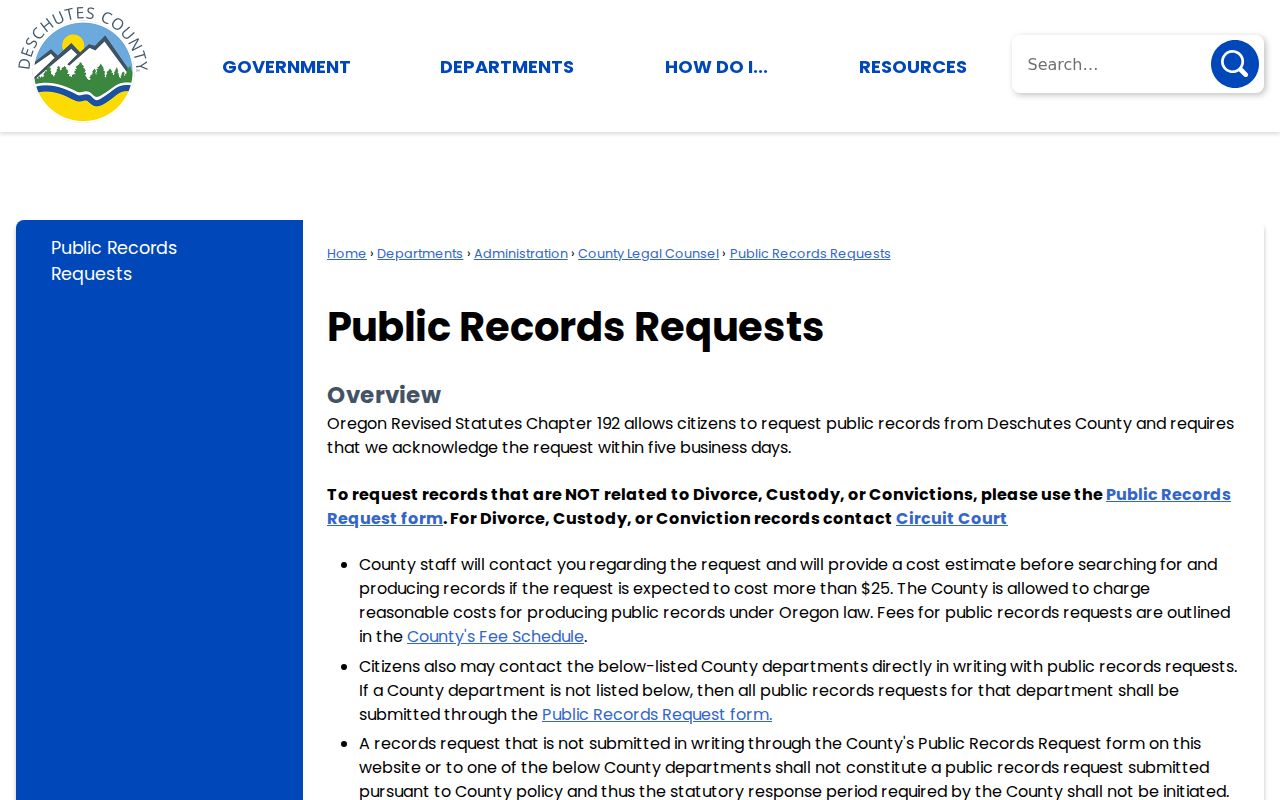
The county request page moves an unavailable record to its custodian. Name the record category, date range, address or identifier, and format you want. City material has its own municipal fallback. A historic permit file or planning attachment runs through Redmond's JustFOIA channel and written-request policy. Neither route obliges an agency to invent a record that never existed.
Oregon's published Public Records Law carries the state framework behind a request. It covers exemptions and response rules.
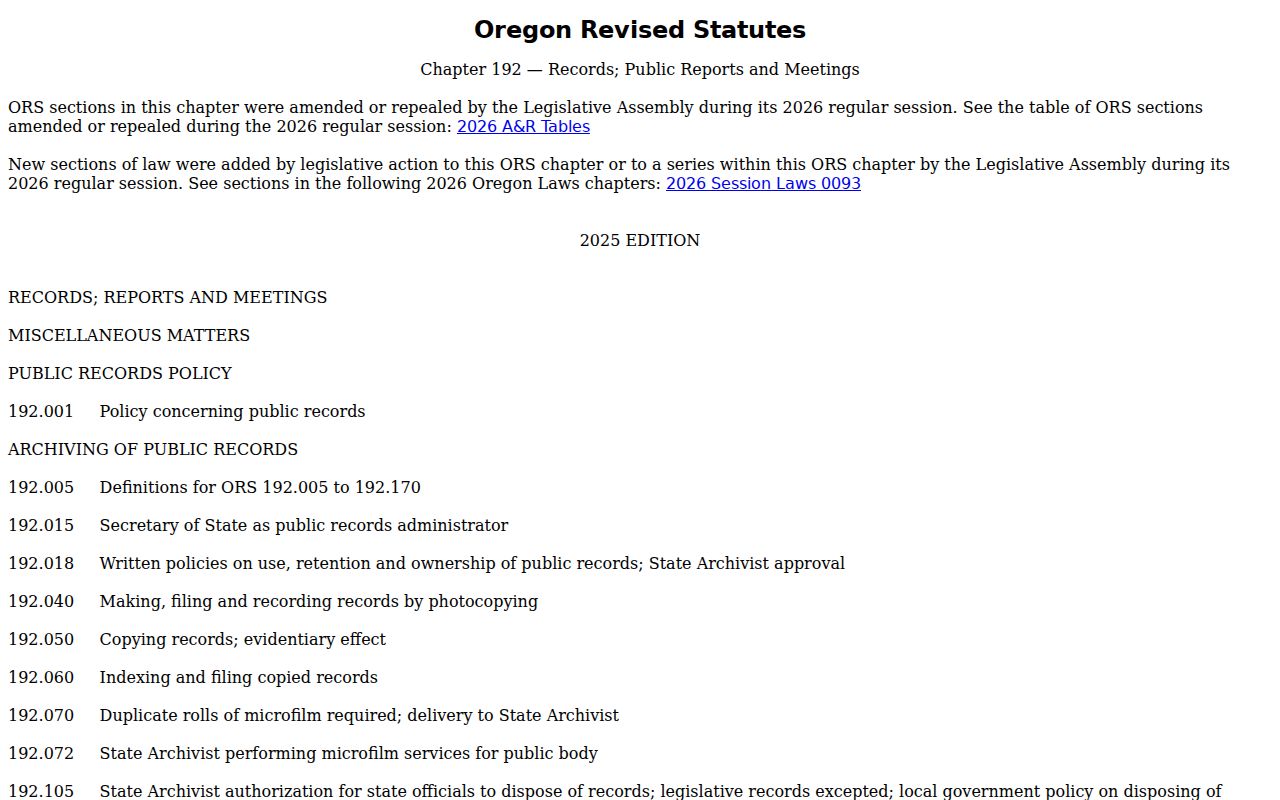
The statute opens a door to nonexempt records. It cannot override confidentiality, a custodian's permitted redactions, or an office's separate certification and identity steps.
Redmond Business Records Need an Identifier
The Oregon Secretary of State's Find a Business service works best once you hold an exact name or registry number. An active result can show a registry number, entity name and type, registration date, registered-agent details, mailing information, and associated names. That describes a filing. It proves nothing about a natural person at an address, nor that an entity operates from every mailing address listed.
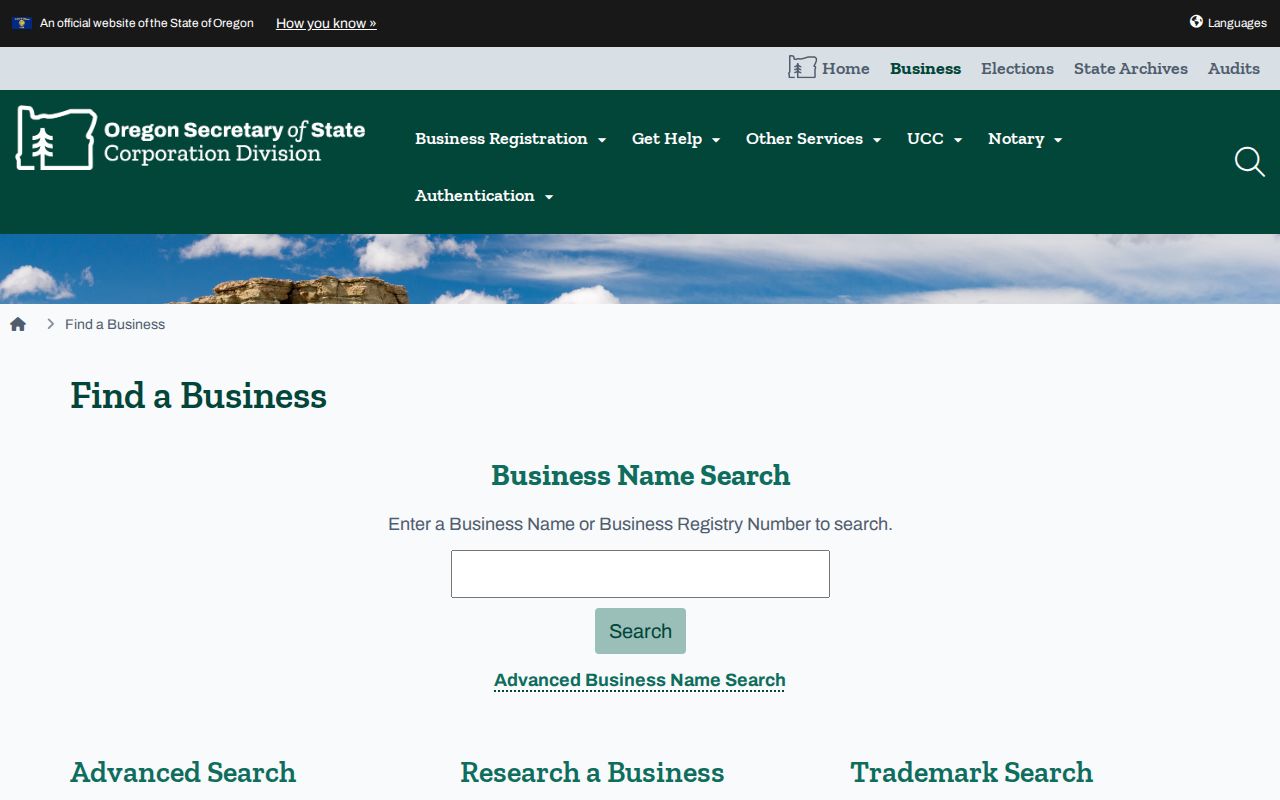
Anchor on the registry number first. A professional credential has its own agency route, such as the Construction Contractors Board. Compare official identifiers against a documented time-and-address context rather than merging records that merely share a similar name, ZIP, or agent address.
Historical Redmond Residents Collections
Old address research eventually leaves county land records for a local-history shelf. The Deschutes County Historical Society describes Central Oregon city directories. These cover Redmond, Bend, and Prineville from about 1940 to 1990. Scattered earlier volumes date to the teens and twenties. The Deschutes Public Library adds genealogy resources, local-history help, newspaper routes, and database access. Use comes under its own conditions. A printed directory entry gives a date-stamped association. It does not prove an annual, fully digitized, complete directory sequence exists.
Note the edition year, printed spelling, page, and address. Also note the listing type and any telephone or profession field the volume actually shows. Then set that entry beside a tax roll, deed, census, or newspaper source. Pick one from the same period. The full collection and citation method live in the Redmond directory book section.
Redmond’s Grid Changes the Record Trail
Redmond's townsite was laid out in 1905. The city incorporated in July 1910. That original cardinal-direction grid still guides current address research. Yet older land records may speak in blocks, lots, plats, or metes-and-bounds rather than a modern street address. Historical resource material counts 112 blocks added by 1928. Then roughly 60 more followed after the war. That growth explains a common puzzle. One patch of ground can carry three different descriptions in a historic map, a directory, and a current parcel view.
Resist forcing those descriptions into one conclusion. Where a street label changes, compare the legal description against a dated map. Near the urban edge, check City boundary layers and DIAL during any project. A Redmond mailing address alone never settles City jurisdiction.
Redmond Permit Files Add Address Context
Permit records give a Redmond address its administrative backstory. The City's Development Services E-Center gathers building and planning applications, city code, the development code, fee schedules, maps, and Oregon ePermitting in one place. A permit ties a work site to an application or a dated project event. That is useful context for a residents directory entry. But it is not a household roster. A listed applicant, owner, contractor, or contact cannot be assumed to live there now.
Oregon ePermitting has its own search habits. Enter the street number and the first part of the street name. Leave Direction and Post Direction blank for that search. A numbered street may need its spelled-out form. A permit or application number works as another route. That portal convention does not override the directional form kept in DIAL and USPS records. For older files or a missing result, contact the right City department or file a focused public-records request listing the address, record type, and date range.
Redmond Residents Research Stops at Privacy
Public display does not cancel confidentiality rules. Oregon's Address Confidentiality Program gives eligible participants a substitute address. It also provides mail forwarding under ORS 192.820-192.868. Voter protections, restricted vital records, protected court categories, signatures, identification numbers, medical details, and minor or protected-party information all stay protected. A record that is missing, redacted, or restricted belongs that way. Do not rebuild it from scattered sources or any residents directory shortcut.
Use records lawfully. Keep the work to a legitimate personal, historical, civic, or estate question. Do not use public records to stalk, harass, threaten, or locate someone who is protected.
A court-themed message or an unexpected demand deserves a second look. Verify it against independently published court contact details, since Oregon Judicial Department guidance warns about court-impersonation scams. Read a docket, roster, property account, or directory entry only for the limited fact it shows.